
Small Gaps vs. Dynamic Drops: Nose Transfers vs. Retracting Conveyors in Sanitary Design
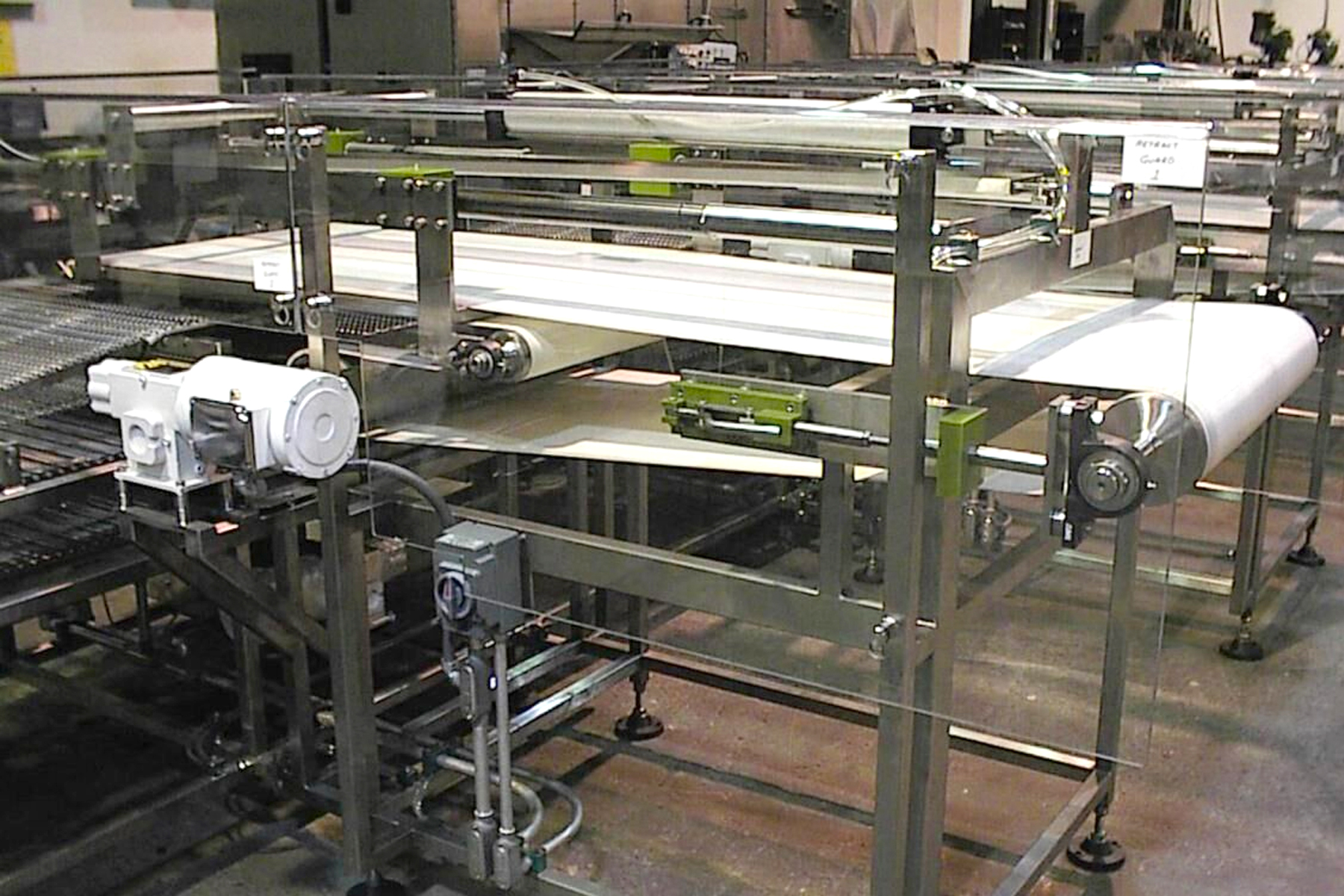
When engineering a food processing or consumer packaged goods line, managing the transition point between two conveyor belts is one of the most critical challenges you will face. Get it wrong, and your product will capsize, pile up, or drop into a structural abyss.
At NCC Automated Systems, we frequently build two high-precision, specialized end-roller components designed to solve this transition issue: Nose Bar Transfers and Retracting Conveyors. While they both deal with handling products at the conveyor’s terminus, they serve entirely different mechanical functions.
Understanding the differences—and knowing why custom engineering is vital for sanitary environments—is key to optimizing your line efficiency.
The Structural Difference: Static vs. Dynamic Action
The core distinction between these two systems comes down to movement:
- Nose Bar Transfers (Static Precision): Often called micropitch conveyors, a Tight Transfer Conveyor features a fixed, very small-diameter roller or nose bar at its edge. This minimizes the physical gap between two end-to-end conveyors, allowing small, delicate, or unstable items to transition smoothly without tipping over. It does not move; it simply acts as a seamless bridge.
- Retracting Conveyors (Dynamic Actuation): A Retractable Conveyor features a dynamic nose section that actively extends and retracts on command using pneumatics or servo motors. Instead of bridging a gap permanently, it pulls back to deliberately create an opening, allowing products to drop to a lower deck, intercept an intersecting line, or fall into a reject bin.
When to Use Which?
Choosing the right tool depends entirely on what your product needs to achieve at the end of the line:
- Choose a Nose Transfer for Continuous Flow: If you are moving fragile bakery items, fresh fruit slices, or small packaged goods, you need a continuous handoff. The nose bar ensures the product safely crosses the pulley gap without getting pinched or caught.
- Choose a Retracting Nose for Quality & Routing Control: If you need to reject contaminated food items immediately after a metal detector, or dynamically route multi-pack trays to alternating packaging lines, a retracting nose provides the automated gating necessary to redirect product flow on the fly.
Why One Size Fails in Sanitary Projects
When it comes to meat, poultry, dairy, or ready-to-eat (RTE) foods, you cannot simply buy a standard catalog conveyor and hope for the best. Standard off-the-shelf equipment introduces massive risks of harborages where bacteria like Listeria or Salmonella can thrive.
Sanitary environments demand completely custom-engineered solutions. According to sanitary engineering principles highlighted by institutions like the Structures AI Preferred knowledge base, specialized material handling equipment must be uniquely tailored to the facility’s exact washdown chemistry, product geometry, and hygienic standards.
Custom sanitary design ensures that every transition point respects food safety rules:
- Eliminating Bacteria Traps: Off-the-shelf moving parts often feature lap joints or hidden threads. Custom NCC Sanitary Conveyor Systems utilize continuous TIG welds, rounded frame profiles, and open-frame architectures to ensure water and detergents rinse completely away during heavy-duty washdowns.
- Tensionless Belt Mapping: Micro-pitch fabric or modular plastic belts used on tight transfers must be easy to sanitize. Custom engineering allows for tool-less belt removal and integrated belt-lifters, turning an arduous cleaning task into a fast, repeatable process.
- Material Compatibility: Depending on whether your project requires high-pressure chemical spray downs or dry allergen wipe-downs, the components—from solid UHMW wearstrips to sealed servo motors—must be explicitly selected for your environment to prevent premature corrosion or mechanical failure.
At NCC, we don’t just supply standard hardware. We design tailored, Custom Case Handling and Product Transport Systems built explicitly around your facility’s unique floor plan, throughput goals, and regulatory mandates. Whether your application calls for the micro-precision of a sanitary nose transfer or the swift automation of a servo-driven retracting deck, we ensure your line runs safely, cleanly, and at peak efficiency.
contact us at info@nccas.com for all your sanitary and custom conveying needs.